WHY IS VITAMIN C CONSIDERED ONE OF THE BEST ANTI-AGING ACTIVES?
Vitamin C is one of the rare cosmetic actives whose benefits are extensively documented in scientific literature. Its main appeal lies in its dual action: it works as an antioxidant, neutralizing free radicals generated by UV rays, pollution, or oxidative stress, while also playing a role in collagen synthesis.
This dual role matters, because skin aging is caused both by external aggressions and by the gradual decline of collagen with age. By supporting both of these mechanisms, vitamin C helps preserve skin firmness, reduce the appearance of wrinkles, and maintain a more radiant complexion.
This is precisely why it is often recommended at the very first signs of aging, but also as a preventive measure for adults wishing to preserve their skin quality over the long term.
Sources: Pullar et al., Nutrients, 2017; Telang, Indian Dermatology Online Journal, 2013
IS VITAMIN C REALLY EFFECTIVE AGAINST DARK SPOTS?
Yes, but it's important to understand how it works. Unlike certain brightening actives that directly target melanin production, vitamin C acts at several stages of the pigmentation process. In particular, it helps limit the oxidation involved in spot formation and contributes to gradually evening out the complexion.
The best results are generally seen on spots linked to sun exposure, blemishes, or skin aging. Older or deeper hyperpigmentation, on the other hand, often requires a more comprehensive approach combining several complementary actives.
For skin prone to recurring dark spots, combining vitamin C with powerful antioxidants such as green tea polyphenols is a particularly effective strategy. Polyphenols help protect against oxidative stress, a recognized factor in the appearance and worsening of many pigmentation irregularities.
→ Discover our green tea polyphenol range.
AT WHAT AGE SHOULD YOU START USING VITAMIN C?
There is no universal age. The real question is rather: from what point is skin exposed to the factors responsible for skin aging?
The answer is simple: very early on. UV rays, pollution, and oxidative stress start affecting the skin well before the first visible wrinkles appear. This is why many dermatologists consider vitamin C to be as much a preventive active as a corrective one.
Between ages 20 and 30, it is mainly used to preserve the complexion's radiance and protect the skin from environmental aggressions. After 30, its benefits become even more relevant, as the skin's natural collagen production gradually begins to slow down.
In a daily routine, vitamin C is therefore less of an "anti-wrinkle" active and more of an active that preserves the skin's overall capital.
WHY IS VITAMIN C PARTICULARLY RECOMMENDED FOR DULL SKIN?
A dull complexion is often the result of a buildup of dead skin cells, slower cell renewal, and repeated oxidative aggressions.
Vitamin C acts on several of these mechanisms, promoting a more even and radiant complexion. Its antioxidant action helps preserve the skin's visual quality, while its effect on complexion uniformity helps improve how light is reflected off the skin's surface.
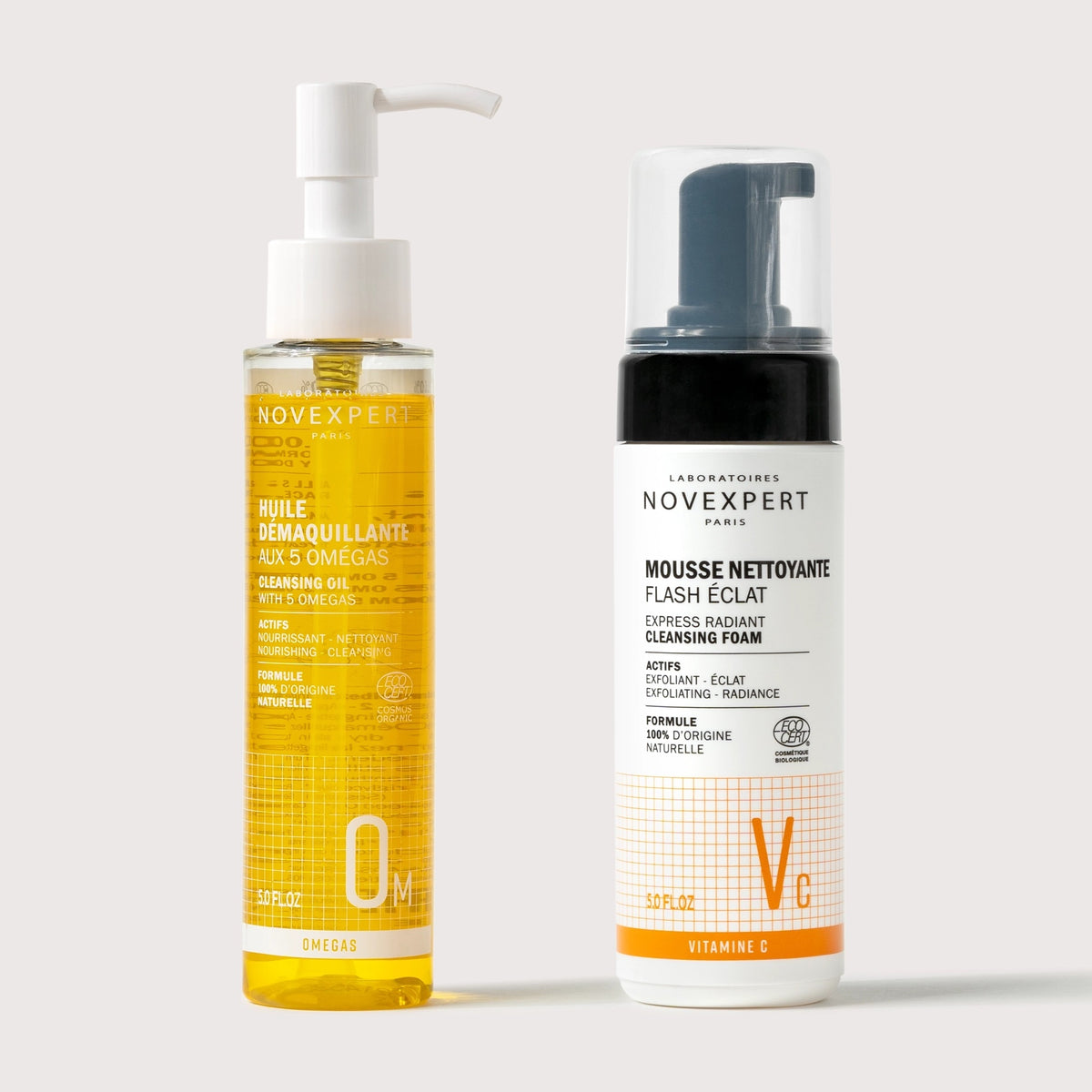
This is why it is frequently used in "instant glow" routines. To maximize this effect, it's a good idea to start the routine with a brightening cleanser that prepares the skin to receive the following actives.
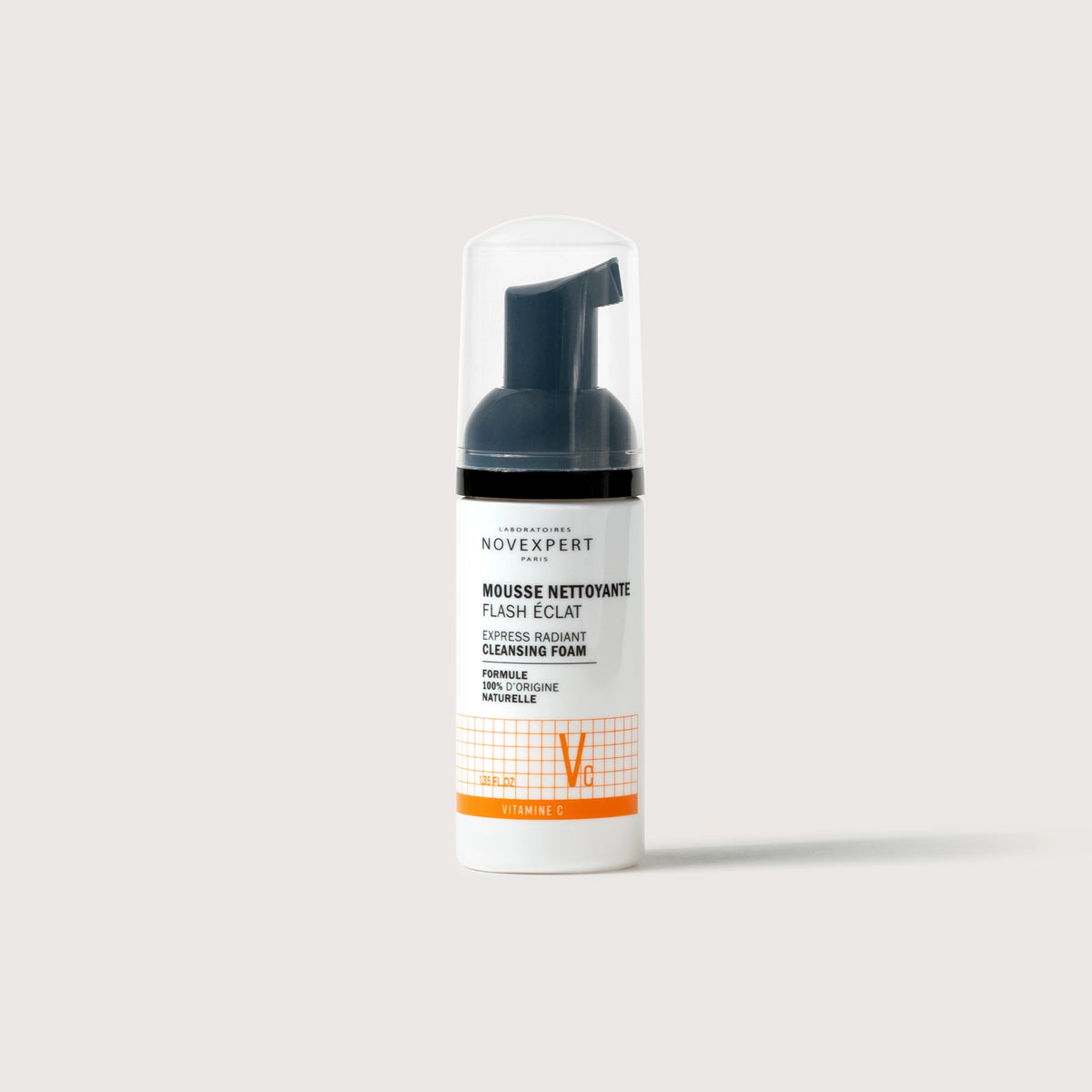
→ Discover the Flash Radiance Foam.
CAN VITAMIN C BE USED ALL YEAR ROUND?
Absolutely. Contrary to popular belief, vitamin C is not photosensitizing.
On the contrary, its antioxidant activity makes it a particularly valuable ally during periods of sun exposure. It obviously doesn't replace sun protection, but it helps strengthen the skin's defenses against UV-induced damage.
Its use is therefore relevant in both summer and winter, provided a suitable sunscreen is applied daily.
This complementarity between vitamin C and SPF is now considered one of the most sound combinations for preventing photoaging.
WHAT IS THE DIFFERENCE BETWEEN AN ANTIOXIDANT VITAMIN C AND AN ANTI-SPOT VITAMIN C?
From a biological standpoint, it's the same active ingredient. The difference lies mainly in the intended goal.
When we talk about antioxidant vitamin C, the focus is on its ability to neutralize the free radicals responsible for premature aging. When we talk about anti-spot vitamin C, the focus shifts more toward its role in evening out the complexion and gradually reducing hyperpigmentation.
In practice, these two benefits are closely linked. Oxidative processes contribute to both skin aging and pigmentation imbalances.
This is what explains why vitamin C has become a go-to active in routines aimed at achieving brighter, more even, and visibly younger-looking skin.
WHY COMBINE VITAMIN C WITH OTHER ANTIOXIDANTS?
Skin is exposed every day to a multitude of environmental aggressions. No single antioxidant can cover, on its own, all the mechanisms involved in oxidative stress.
This is why modern approaches often favor synergies between actives. Green tea polyphenols, for example, are among the most studied natural antioxidants. Their complementarity with vitamin C helps broaden the spectrum of protection against external aggressions.
This approach is particularly relevant for skin prone to an uneven complexion, dark spots, or visible signs of skin fatigue.
CAN VITAMIN C BE USED EVERY DAY?
Yes, vitamin C is an active designed for daily use. In fact, its effectiveness depends more on consistent use than on concentration alone.
Every day, the skin is exposed to UV rays, pollution, tobacco smoke, stress, and other environmental factors that generate free radicals. These unstable molecules contribute to collagen breakdown, the appearance of wrinkles, and certain pigmentation irregularities. By providing the skin with daily antioxidant support, vitamin C helps limit these effects before they become visible.
This is why most dermatologists recommend applying it in the morning, before moisturizer and sun protection. This combination is particularly relevant for preventing skin aging and preserving the complexion's radiance.
For beginner or reactive skin, a gradual introduction can be considered. Using it every other day for the first few weeks generally allows the skin to adjust before moving to daily use.
Vitamin C is therefore part of a long-term skincare strategy rather than a one-off action. The most visible benefits generally appear after several weeks of regular application.
WHAT SKIN TYPE CAN USE VITAMIN C?
Vitamin C is one of the most versatile actives in cosmetics and suits the vast majority of skin types. Its benefits aren't limited to mature skin or anti-aging concerns.
Dull skin benefits from its ability to restore radiance and improve complexion evenness. Skin prone to dark spots uses it to help correct pigmentation irregularities. Skin exposed to pollution or an urban environment finds particularly valuable antioxidant support in it. As for mature skin, its main draw is vitamin C's action on collagen and skin aging prevention.
Even oily or blemish-prone skin can benefit from vitamin C, especially when blemishes leave persistent pigmented marks behind.
The only real nuance concerns very sensitive or reactive skin. Certain forms of vitamin C, particularly highly concentrated L-ascorbic acid, can cause tingling or discomfort. In that case, it's often better to opt for gentler derivatives or more gradual concentrations.
Ultimately, the question isn't so much whether vitamin C suits your skin type, but rather which form and concentration will be most appropriate for your specific needs.
IS VITAMIN C SUITABLE FOR SENSITIVE SKIN?
Contrary to popular belief, vitamin C isn't reserved for resilient skin. It all depends on the form used, its concentration, and the quality of the formulation.
Sensitive skin often faces a dual challenge: it needs effective actives to work on radiance, redness, or dark spots, but it can struggle to tolerate overly aggressive products. A well-formulated vitamin C makes it possible to benefit from powerful antioxidant action without compromising skin comfort.
Sensitive skin can genuinely benefit from vitamin C to improve complexion luminosity, support the skin's natural defenses against external aggressions, and help correct pigmentation irregularities. The key lies in choosing products that are suitable and tested to minimize the risk of discomfort.
Our formulas have been developed to offer an excellent balance between effectiveness and tolerance. They are hypoallergenic and suited to sensitive skin seeking visible action on complexion radiance, signs of fatigue, or dark spots.
Vitamin C is also a particularly appreciated active during pregnancy and breastfeeding, periods during which some women notice a more uneven complexion or the appearance of pigmentation spots linked to hormonal changes.
When included in a suitable routine, it allows you to continue caring for your skin with an active that is well recognized and widely used in cosmetic dermatology.
IS VITAMIN C COMPATIBLE WITH PREGNANCY AND BREASTFEEDING?
Yes. Vitamin C is one of the most widely used cosmetic actives during pregnancy and breastfeeding. This period is often accompanied by visible skin changes: the appearance of dark spots, a more uneven complexion, loss of radiance, or increased sensitivity. Vitamin C directly addresses several of these concerns thanks to its antioxidant, brightening, and complexion-evening action.
Under the influence of hormonal changes, some women in particular develop melasma, also known as the "pregnancy mask." While no single cosmetic active can fully prevent or correct this phenomenon on its own, vitamin C is recognized for its value in routines aimed at improving complexion evenness and helping manage pigmentation irregularities.
At Novexpert, this commitment goes beyond vitamin C alone. Our entire catalog has been formulated with a particular focus on safety and tolerance. All of our products, including our vitamin C skincare, are compatible with pregnancy and breastfeeding. This approach allows expectant and new mothers to build a complete routine without having to question the compatibility of each product.
Our formulas are also hypoallergenic and designed to suit sensitive skin, which is often more reactive during this period. We believe there should be no need to choose between effectiveness and peace of mind: a routine suited to pregnancy and breastfeeding can still deliver visible results on complexion radiance, dark spots, and the first signs of skin aging.
For women dealing with hormonal dark spots, combining vitamin C with other recognized antioxidants, such as green tea polyphenols, is a particularly effective strategy. This complementarity helps support the skin against oxidative stress while promoting a more even, radiant complexion.
Even though all of our products are formulated to be compatible with pregnancy and breastfeeding, every situation is unique, so it is still recommended to seek advice from a healthcare professional in case of specific medical follow-up or particular questions.